Sur

bakery


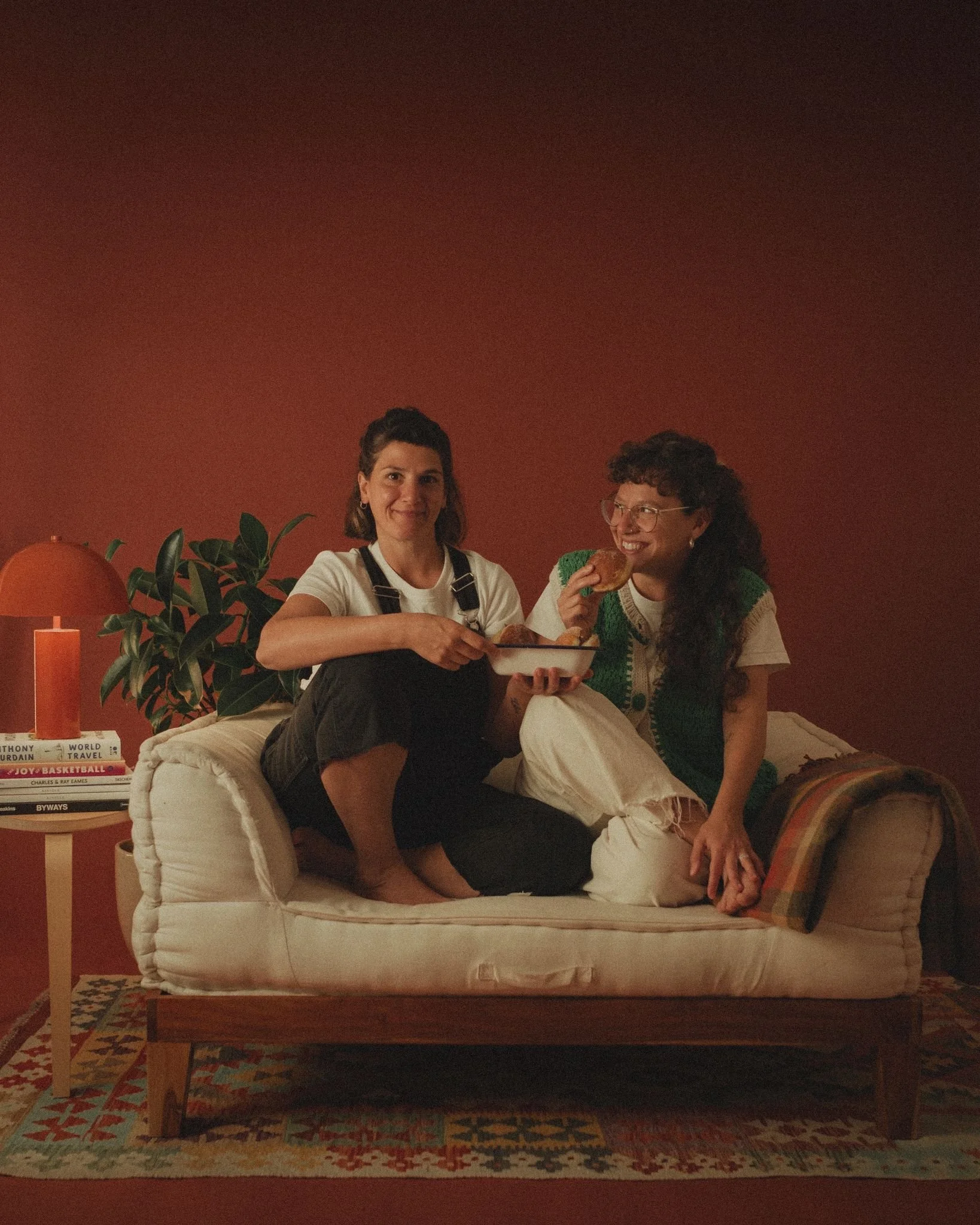
Our journey has been anything but ordinary. Through every step, we've focused on staying true to our values and making space for thoughtful, lasting work.

Our Story
Our Story
Our Story
Photos Guillaume Garat
Styling Maureen Barbier
Art Direction Joséphine Daru
Set Design Camille Pouyat
Model Emily Bennett
Hair Damien Lacoussade
Makeup Ellen Walge
Nails Romane Martini
Producer Sophie Lebègue

Kea, also known as Tzia, is the westernmost of the Cyclades islands in the Aegean Sea, and the one closest to Athens. To this day—and in contrast to many of the better-known islands nearby—Kea has not been overwhelmed by tourism and maintains some of its industrial identity—something that appealed to Fassianos at the time. Back then, the island sustained a lively farming sector and was home to tanneries and a large enamel homeware factory. 

Two large fish on a plate, served on a table beside a single chair, seem to await a lone guest on a checkerboard tiled terrace. Drawn with playful watercolor strokes of red, green and blue, on a scrap of paper that the artist likely had to hand, the scene has a disarming simplicity. At the top, in the artist’s handwriting, it reads: “Good fish of Kea.” It welcomes you as you step over the threshold of Alekos Fassianos’ house: A homage to the Greek island it sits on—and its fish—that captures the unpretentious spirit of the artist.

Perched high on the northern hillside of Kea’s capital, Ioulida, the house was Fassianos’ summer retreat and studio for over 50 years. The artist—who is celebrated in Greece for weaving folk traditions and the dreamlike quality of Greek mythology with the everyday—had studied painting and lithography in Athens and Paris, and was practicing between the two cities when he first visited the island in the mid-1960s. He was deeply impressed. 

Kea, also known as Tzia, is the westernmost of the Cyclades islands in the Aegean Sea, and the one closest to Athens. To this day—and in contrast to many of the better-known islands nearby—Kea has not been overwhelmed by tourism and maintains some of its industrial identity—something that appealed to Fassianos at the time. Back then, the island sustained a lively farming sector and was home to tanneries and a large enamel homeware factory. 

“Most items have remained exactly where Fassianos left them.”